
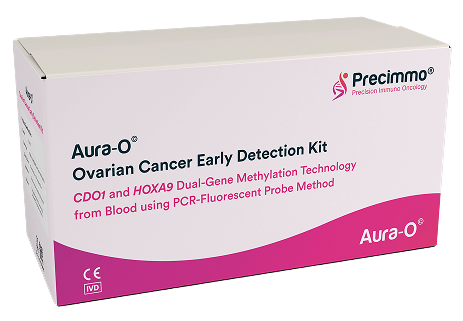
is a non-invasive blood test that detects early ovarian cancer through CDO1 and HOXA9 gene methylation in
When to Choose
Aura-O™?
Choose Aura-O® when you have irregular periods, pelvic pain, Polycystic Ovary Syndrome (PCOS), endometriosis, or a family history of reproductive cancer it’s a proactive step toward a healthier you and future generations.

Aura-O™ Ovarian Cancer Screening Process (Minimally Invasive Procedure)

Step 01
Schedule Screening and Get IDBook your appointment and receive an activation ID for secure tracking and results access.
Step 03
Blood Sample CollectionA phlebotomist will draw a 5 ml blood sample using a minimally invasive procedure for a quick and comfortable experience.
Why Aura-C™? is a Game-Changer for Women’s Health
Non-Invasive Sample Collection:
Uses ctDNA from a small venous blood draw with no surgery, no biopsy and no discomfort.
Early Detection of FIGO Stages:
Aura-O Detection Sensitivity by FIGO Stage
84.6%
88.9%
84.8%
91.7%
Detection Sensitivity (%)
DNA Methylation-Based Assay:
Targets clinically validated markers (CDO1 and HOXA) for high sensitivity and specificity.
High Accuracy:
89.7%
97.7%
Efficient Triage Tool
More accurate and cost-effective than CA125, HE4, and ROMA Index for early ovarian cancer detection.
CE-IVD Certified
Approved for clinical use.

Aura-O™ Outperforms Traditional Ovarian Cancer Detection Methods in Both Sensitivity & Specificity
Sensitivity
Specificity
Sensitivity and Specificity of Ovarian Cancer Detection Methods
Clinical Trial Insights
Aura-O detects cancer earlier and more accurately than traditional tests like CA125, HE4 or the ROMA index giving you peace of mind with reliable results.
What You Receive

Results Online
Access your test results securely via our portal using your activation ID.
Gynecology Consultation
Get a personalized consultation with a gynecologist to discuss your results and next steps.

Further Screening or Treatment
If needed, you’ll receive recommendations for additional screening or treatment.